
Print & Imaging
What Most Resellers Get Wrong About Print Margins
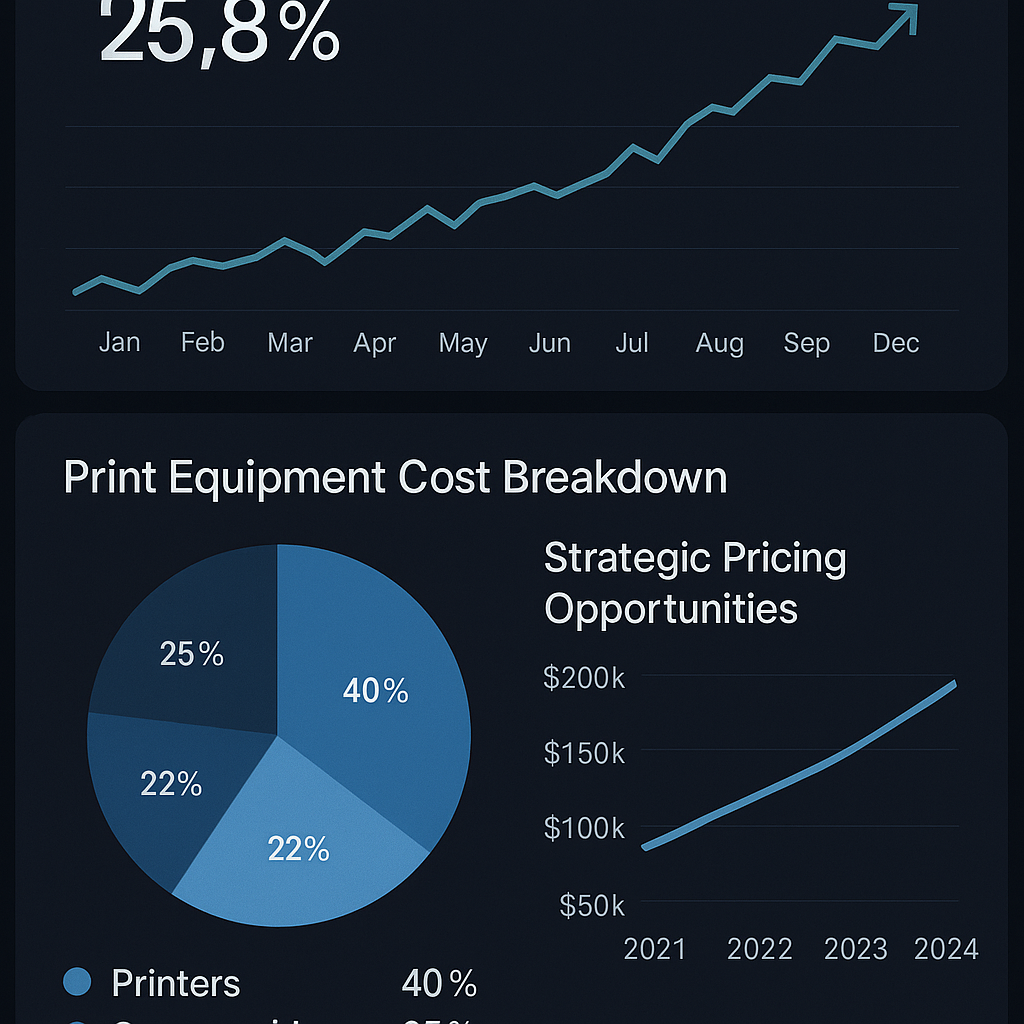
Understanding print margin dynamics can make the difference between thriving in today's competitive market and watching profits disappear—yet most resellers overlook the factors that truly drive profitability.
Introduction
Print margins should be straightforward. You buy hardware and consumables at wholesale, mark them up, and pocket the difference. But if you're an MSP, IT reseller, or office technology dealer who's watched your print revenue flatten or decline over the past few years, you already know the reality is far more complex.
The challenge isn't just commoditization or online competition—though those factors play a role. The real issue is that most resellers are operating with an outdated understanding of what actually drives print profitability. They're making pricing decisions based on hardware margins while ignoring the hidden costs that erode their bottom line. They're chasing volume deals that look attractive on paper but drain resources in practice. And they're missing strategic opportunities to build sustainable, high-margin print businesses.
This isn't about working harder or cutting prices further. It's about understanding the complete picture of print margin dynamics and restructuring your approach accordingly. Let's examine the critical factors most resellers overlook—and how addressing them can unlock new profit potential in your print business.
The Hidden Cost Structure That Erodes Your Bottom Line
When resellers calculate print margins, they typically focus on the obvious: what they pay for hardware or toner cartridges versus what they charge the customer. This front-end margin calculation feels familiar because it mirrors how most technology products are priced. But print is fundamentally different, and this narrow focus obscures the true cost structure.
The hidden costs begin accumulating the moment you take on a print customer. There's the pre-sale investment: needs assessments, site surveys, device recommendations, and proposal development. For many resellers, this pre-sale effort represents 10-15 hours of technical and sales time—costs that are never directly recouped if you're competing purely on hardware price.
Then comes deployment. Unlike laptops or displays that customers can set up themselves, print devices require configuration, network integration, driver deployment, and user training. Even straightforward installations consume technician hours. Complex environments with multiple locations, diverse device fleets, or specialized workflows multiply these costs exponentially. Many resellers underestimate deployment time by 30-40%, meaning their actual labor costs far exceed what they've factored into their pricing.
The ongoing relationship carries additional hidden expenses. You're fielding support calls about connectivity issues, paper jams, print quality problems, and driver conflicts. You're managing warranty claims and coordinating service. You're tracking consumable usage and managing reorders. Each of these touchpoints has a cost—in staff time, systems overhead, and customer relationship management.
Perhaps most significantly, there's inventory carrying cost. To serve customers promptly, you need consumable inventory on hand. That inventory ties up capital, requires warehouse space, and risks obsolescence as device models change. When you factor in the true cost of capital and inventory management, that toner cartridge you're selling at a 25% margin might only be generating 8-12% actual profit.
The resellers who succeed in print understand this complete cost structure. They build pricing models that account for the entire customer lifecycle, not just the initial hardware transaction. They track time-to-deployment metrics and support ticket volumes by device type, using this data to inform both pricing and product selection. And they design their print offerings to minimize high-cost activities while maximizing recurring revenue opportunities.
Why Volume-Based Pricing Models No Longer Work
The traditional approach to print margins has been volume-driven: negotiate better wholesale pricing through higher purchase volumes, then compete aggressively on price to win large deals. This model made sense when print volumes were growing and customers prioritized cost-per-page above all else. But market dynamics have fundamentally shifted.
Print volumes have declined significantly as businesses digitize workflows and embrace paperless processes. The remote and hybrid work trends that accelerated during recent years have only intensified this decline. A reseller who built their print business on high-volume contracts is now watching those volumes shrink year over year—and with them, the margins those contracts were supposed to deliver.
Competing on volume creates another critical problem: it trains customers to see print as a pure commodity. When you position yourself primarily on price and volume, you're competing against every online retailer and big-box supplier. Your value becomes purely transactional, and customer loyalty extends only as far as your ability to undercut the next quote. This race to the bottom is unsustainable, particularly when you're providing services and support that pure-play online sellers don't offer.
The resellers who've maintained healthy print margins have shifted away from volume-based models toward value-based approaches. Instead of selling devices and consumables based on cost-per-page, they're selling solutions based on business outcomes. They're helping customers optimize their print infrastructure to reduce total cost of ownership. They're bundling print management with broader IT services. And they're positioning themselves as strategic advisors who help customers navigate print technology decisions rather than order-takers who compete on price.
This doesn't mean volume is irrelevant. Efficient resellers still leverage purchasing power for better wholesale pricing. But they're not passing through 100% of those savings to customers in a bid for market share. Instead, they're using improved wholesale economics to fund better service, more comprehensive solutions, and sustainable margin structures that support long-term customer relationships.
The transition from volume-based to value-based pricing requires confidence and clarity. You need to articulate what differentiates your print offering beyond price. You need to demonstrate ROI that extends beyond cost-per-page. And you need to be willing to walk away from opportunities where customers are purely price shopping, focusing instead on prospects who value the complete solution you provide.
The Service and Support Overhead Most Resellers Underestimate
Ask most resellers what they spend supporting print customers, and you'll get vague estimates based on gut feeling rather than data. This blind spot is costly because service and support overhead often consumes 40-60% of gross print margins—yet most resellers aren't tracking these costs with sufficient granularity to make informed decisions.
The support burden varies dramatically by device type, customer environment, and deployment model. A small business with two identical devices in a simple network environment generates minimal support overhead. An enterprise customer with 50 devices across three locations, multiple device models, complex network requirements, and diverse user needs can easily consume 20+ support hours per month. If you're pricing both scenarios with the same margin assumptions, you're almost certainly losing money on the complex deployment.
Different device categories carry different support profiles. Entry-level devices often have higher failure rates and shorter lifecycles, generating more support calls and replacement logistics. Specialty devices like wide-format printers or production equipment require deeper technical expertise and longer troubleshooting time. Older devices in a customer's existing fleet create integration challenges and compatibility issues that newer, standardized deployments avoid.
The support model you offer also dramatically impacts overhead. If you're providing unlimited phone support with rapid on-site response, your costs will be substantially higher than a reseller who offers email-based support with next-business-day service. Neither model is inherently wrong, but your pricing must reflect the service level you're committing to deliver.
Smart resellers are taking several approaches to manage support overhead. First, they're implementing tools to track support time by customer, device type, and issue category. This data reveals which products generate disproportionate support costs and which customers are unprofitable when true service costs are included. Second, they're standardizing their device recommendations around products with proven reliability and lower support requirements—even if those devices don't offer the highest front-end margins.
Third, they're moving toward proactive management models that reduce reactive support. Remote monitoring tools that alert you to consumable levels, device errors, and performance issues allow you to address problems before customers call. Print management software that provides usage analytics and cost allocation reduces administrative overhead and customer confusion. Managed print service agreements that include regular maintenance and automatic consumable fulfillment create predictable revenue while reducing support incidents.
Finally, leading resellers are building support costs explicitly into their pricing structures rather than treating them as general overhead. They're creating service tiers with different response times and support channels, allowing customers to choose the level that matches their needs while ensuring every tier is profitable. And they're using service agreements to create recurring revenue streams that offset the ongoing support commitment print customers require.
Strategic Product Mix: Balancing Hardware, Consumables, and Solutions
Most resellers think of print business in two categories: hardware and consumables. This binary view misses the strategic opportunity to build a balanced portfolio that maximizes both initial margins and lifetime customer value. The resellers with the healthiest print margins have developed sophisticated product mix strategies that go far beyond selling devices and toner.
Hardware margins have compressed to the point where many resellers barely break even on device sales, hoping to recoup profit through consumable sales over the device lifetime. This approach is risky. You're investing in customer acquisition and deployment with no guarantee of consumable revenue. Customers may buy cartridges from online retailers, use third-party compatibles, or replace devices sooner than expected. If you're counting on three years of consumable revenue to make a hardware deal profitable, you're building your business on hope rather than strategy.
The alternative is to view hardware as one component of a complete solution. When you're recommending devices, you're simultaneously designing a consumable program, deploying management software, establishing service agreements, and potentially integrating print into broader managed services. Each component contributes margin, and together they create switching costs that improve customer retention.
Let's examine compatible consumables specifically, since they represent both an opportunity and a decision point for resellers. High-quality compatible toner—like the Hyperion-compatible supplies available through distributors focused on channel success—can offer substantially better margins than OEM cartridges while delivering comparable performance and reliability. For resellers, this creates a strategic advantage: you can offer customers lower per-page costs while maintaining or even improving your consumable margins.
However, the compatible approach requires careful management. You need to select suppliers with proven quality and reliable availability. You need to educate customers about the performance and warranty implications. And you need to monitor print quality to ensure customer satisfaction. When executed well, a compatible consumable strategy can dramatically improve your print profitability. When executed poorly, it can damage customer relationships and create support headaches that erase any margin advantage.
Beyond hardware and consumables, the real margin opportunity lies in solutions and services. Print management software, secure print release, document capture and routing, cloud integration, mobile printing—these solutions command substantial margins while differentiating your offering. They also create technical integration that deepens customer relationships and increases switching costs.
Managed print services represent the evolution of this approach. Rather than selling transactions, you're selling outcomes: cost per page, uptime guarantees, user support, proactive consumable management. MPS contracts create predictable recurring revenue, improve customer retention, and often command better margins than transactional selling. For resellers with the infrastructure to deliver MPS effectively, it's the most sustainable model for print profitability.
The key is to stop thinking about print margins in terms of individual transactions and start thinking about portfolio margins across your entire customer base. Some customers will generate most of their value through consumable sales. Others will be service-heavy but pay premium rates for responsive support. Still others will integrate print into broader IT managed services where print is one component of a larger recurring revenue relationship. By diversifying your print revenue across hardware, consumables, and solutions, you create a more resilient and profitable business.
Unlocking New Print Margin Potential with Integrated Solutions and Channel Expertise
The future of print margins isn't about finding ways to squeeze more profit from declining transactions. It's about reimagining print within the context of the modern workplace and your customers' complete technology needs. Resellers who make this shift are discovering new margin opportunities that were invisible under the traditional hardware-and-toner model.
Start by recognizing that print doesn't exist in isolation. Your customers' printing needs intersect with their document management requirements, their collaboration workflows, their mobility strategies, and their security postures. When you approach print as an integrated component of workplace technology rather than a standalone category, you open up solution opportunities that command substantially higher margins.
Consider the hybrid work environment most businesses now navigate. Employees print from home offices, corporate offices, and collaborative spaces. They need solutions that work seamlessly across locations, provide secure document access, and integrate with cloud applications. A reseller who can design and support this complete environment—combining hardware, software, security, and support—delivers far more value than one who simply sells printers. And value commands margin.
Channel expertise becomes a critical differentiator in this environment. Your customers—particularly SMBs and organizations without deep IT resources—need guidance navigating the complexity of modern print and document solutions. They need someone who understands how different technologies integrate, who can recommend solutions based on real-world experience with similar clients, and who can support them through implementation and ongoing optimization.
This is where partnering with a distribution partner like Image Star creates strategic advantage. Rather than trying to master every technology category and manage relationships with dozens of manufacturers, you can leverage distributor expertise and portfolio breadth. You gain access to proven solutions across communications, displays, computing, and supplies. You benefit from distributor product training and technical support. And you can focus your energy on understanding customer needs and delivering solutions rather than managing vendor relationships and logistics.
The integrated approach also creates natural expansion opportunities. A customer who trusts you to manage their print infrastructure is a strong candidate for broader IT managed services. The print management tools you deploy can expand into document management and workflow automation. The service relationship you establish through print support creates visibility into other technology needs and future opportunities.
From a margin perspective, integration delivers multiple benefits. You're increasing deal size by selling complete solutions rather than individual products. You're improving customer retention through deeper technical integration. You're creating recurring revenue through management and support services. And you're differentiating your offering in ways that reduce price competition and support value-based pricing.
Perhaps most importantly, you're building a business model that's resilient in the face of declining print volumes. As printing continues to decrease, transactional resellers will see their revenues shrink proportionally. Resellers who've built integrated solution practices will find that print becomes one component of a diversified technology relationship. The revenue per customer may shift from consumables to services, but the total customer value—and your margins—can actually increase.
This transition requires investment. You need to develop broader technical capabilities. You need to evolve your sales approach from product-focused to solution-focused. You need tools and processes to deliver more complex solutions effectively. But resellers who've made this journey consistently report that their print business has become both more profitable and more strategic to their overall growth.
The opportunity is particularly strong right now. Many of your competitors are still operating with traditional print business models, competing on hardware price and hoping for consumable revenue. Customers are increasingly frustrated with this transactional approach and hungry for resellers who can be true technology advisors. By positioning yourself as a solutions provider who happens to include print in your portfolio, rather than a print reseller trying to add services, you can capture margin opportunities your competitors don't even recognize exist.
Start by examining your current print customer base. Which customers are getting the most value from your relationship? Which ones are most profitable when you account for all costs and all revenue streams? The patterns you identify will reveal where the margin opportunities exist and guide your strategy going forward. Then explore how you can deepen those successful relationships with additional integrated solutions—and seek out new prospects who fit that profile rather than chasing every print opportunity that comes your way.
The print business isn't dying—it's evolving. Resellers who evolve with it, who embrace integration and solution-selling, and who leverage channel partnerships to expand their capabilities will find that print margins can actually improve even as print volumes decline. The key is to stop playing the old game and start building the new model.