
Audio Visual & Collaboration

The office didn't shrink. It just stopped being predictable.
Managing an office for hybrid workers isn’t a real-estate problem — it’s a coordination problem. Here are eight things your clients are wrestling with right now, what Skedway does about each one, and where the recurring revenue sits for you.
Ask any office or facilities manager how hybrid is going and you’ll hear a version of the same answer: they’re planning for a workforce that won’t tell them when it’s showing up. Tuesday and Wednesday the floor is jammed and there’s nowhere to take a call. Thursday it’s a ghost town. The lease is written for 200 seats and nobody can prove how many of them get used.
More square footage doesn’t fix that, and neither does another policy memo. What’s missing is a system that knows what’s actually happening in the building — and your clients are bringing that gap to you, their IT, AV or MSP partner, because it looks like a technology problem. It is one. Skedway is a workplace optimization hub that pulls every shared resource — desks, rooms, parking, lockers, visitors, even the door — into one connected system and automates the parts nobody has time for. Below are the eight challenges that surface in almost every hybrid conversation, and how each one turns into a line you can sell.
01Nobody knows who’s coming in tomorrow
This is the root of everything else. Attendance is invisible, so every downstream decision is a guess — how much cleaning to schedule, whether to run the café, which floors to condition, how many seats a team actually needs. Managers can’t tell their people where to sit because they don’t know who’s in. Skedway replaces the guesswork with real check-in data and live occupancy counts, broken out by day, floor and team, in one dashboard. For you, that dashboard is the recurring software line at the center of the account — and the first report you hand over is the discovery call that sells everything after it.
- ★Recurring software seat at the heart of the deal — the piece nothing else replaces
- ★Measured data, not survey data — the client stops arguing about anecdotes
- ★Your easiest opener: “let’s find out what’s really happening on your floor”
02Desks sit reserved and unused all day
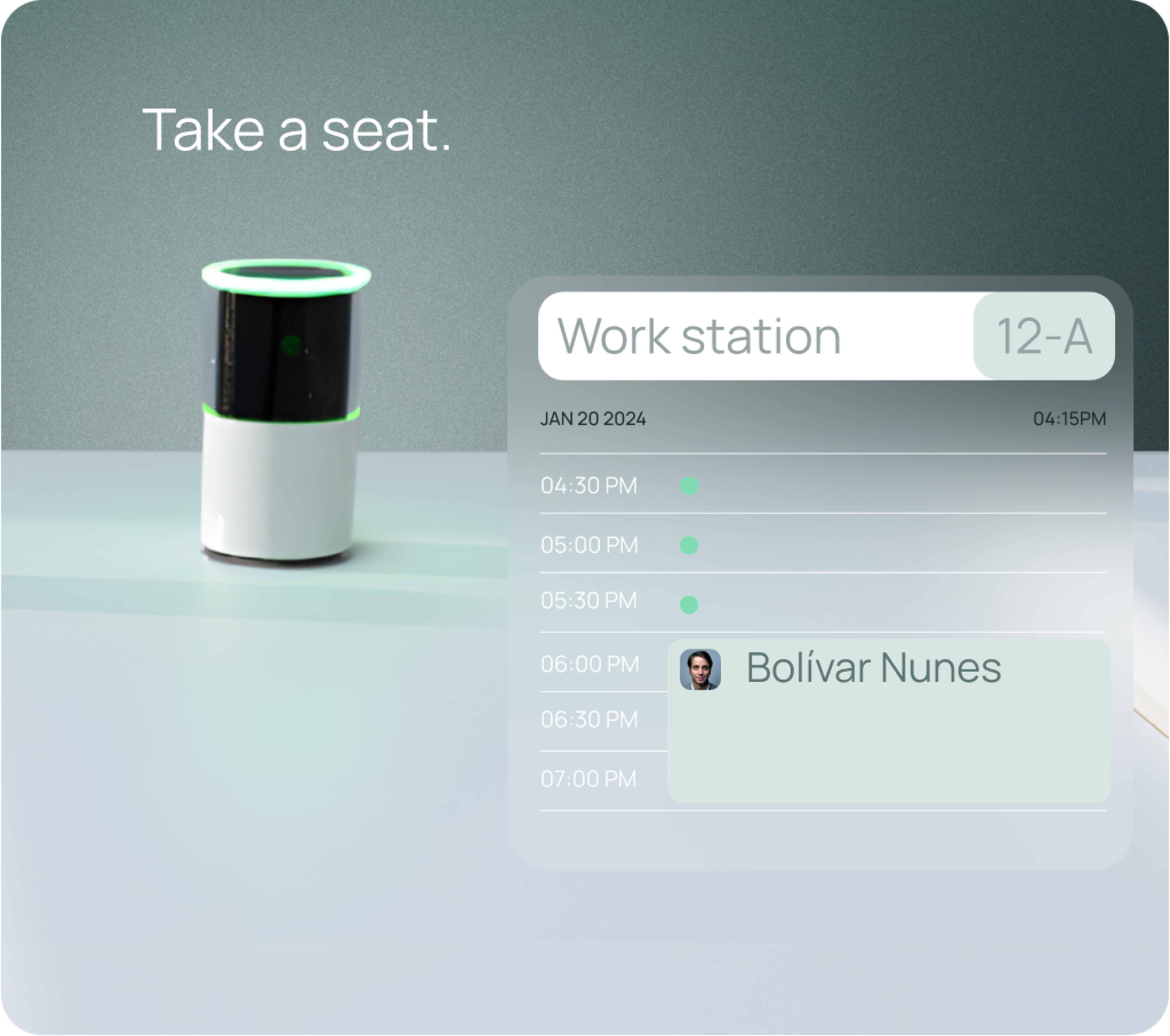
Hot-desking sounded simple until people started booking a seat for the week and coming in once. Half the floor shows as claimed, most of it is empty, and the employees who did come in can’t find anywhere to sit. Skedway’s AI desk manager, Avail, handles it without asking anyone to change their habits: people-sensing notices when a seat is genuinely in use, books and checks it in automatically, then releases it when the person leaves. A halo of light shows status across the room, so nobody walks the floor guessing. For you, every desk is a mix of sensor, device and software seat — a multi-component, per-floor sale that recurs, and the simplest demo in the category. Sit down; it just works.
- ★Per-desk hardware, sensing and software — not a one-time box
- ★Self-releasing seats recover capacity your client already pays for
- ★Scales floor by floor and site by site — expansion is built in
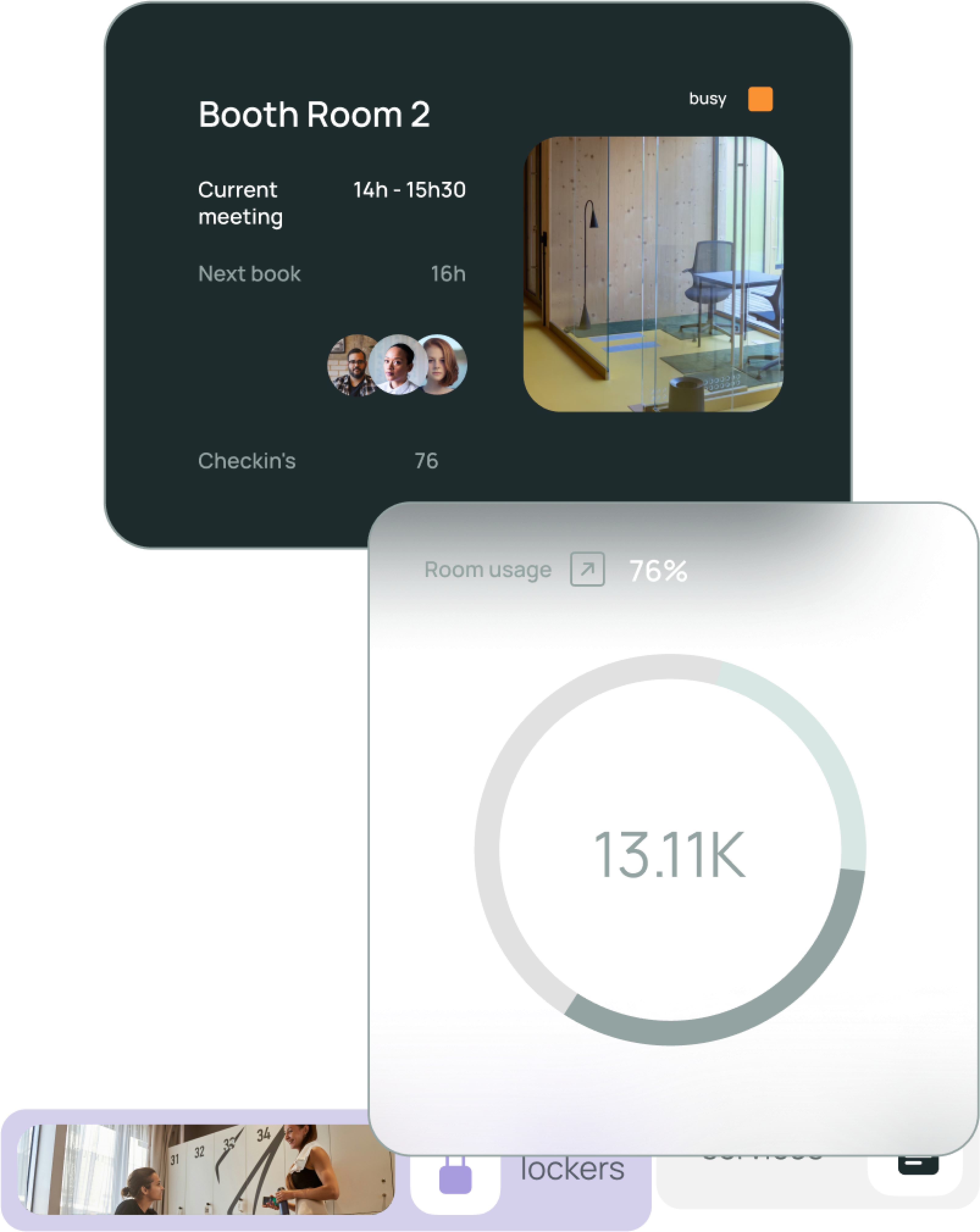
03Meeting rooms that lie about being busy
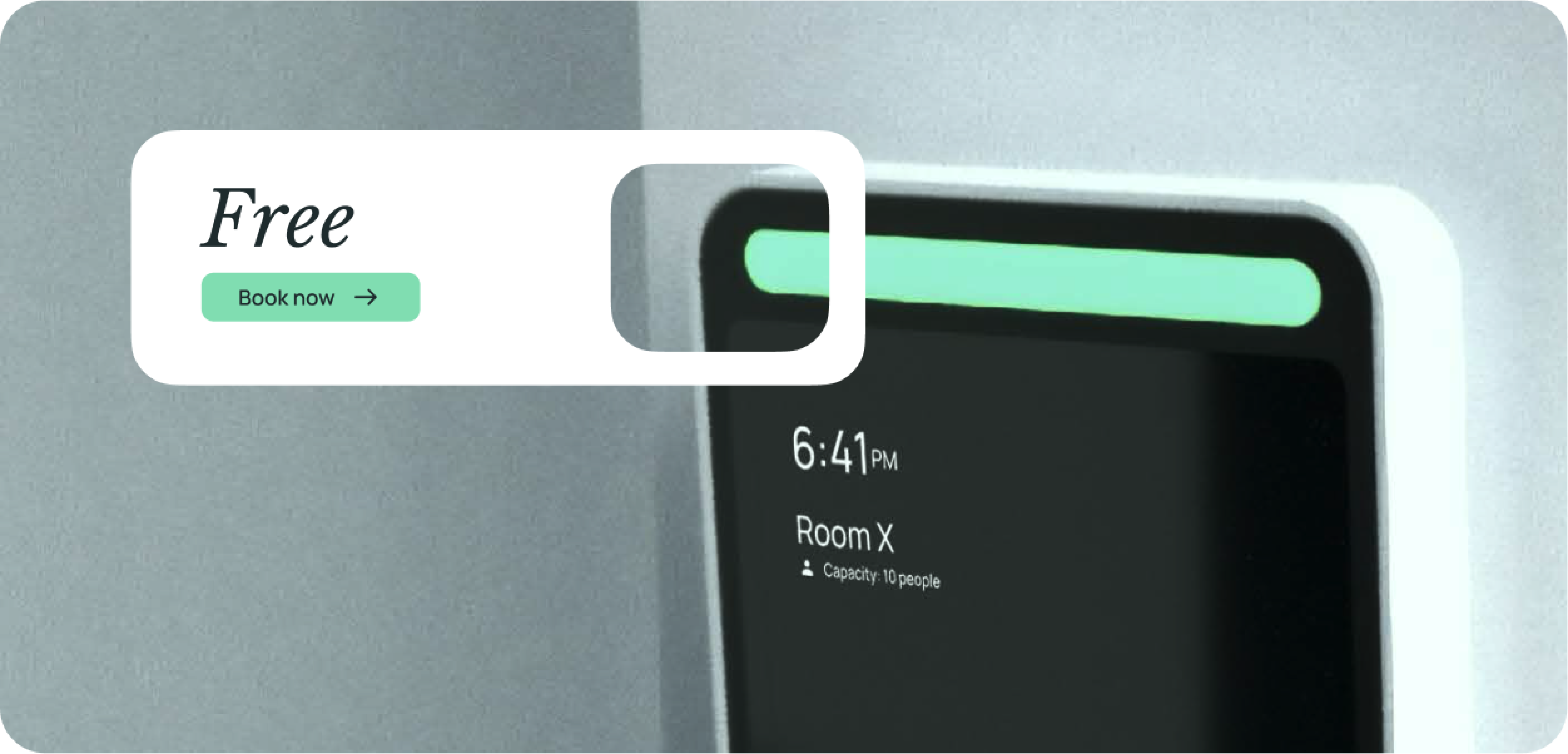
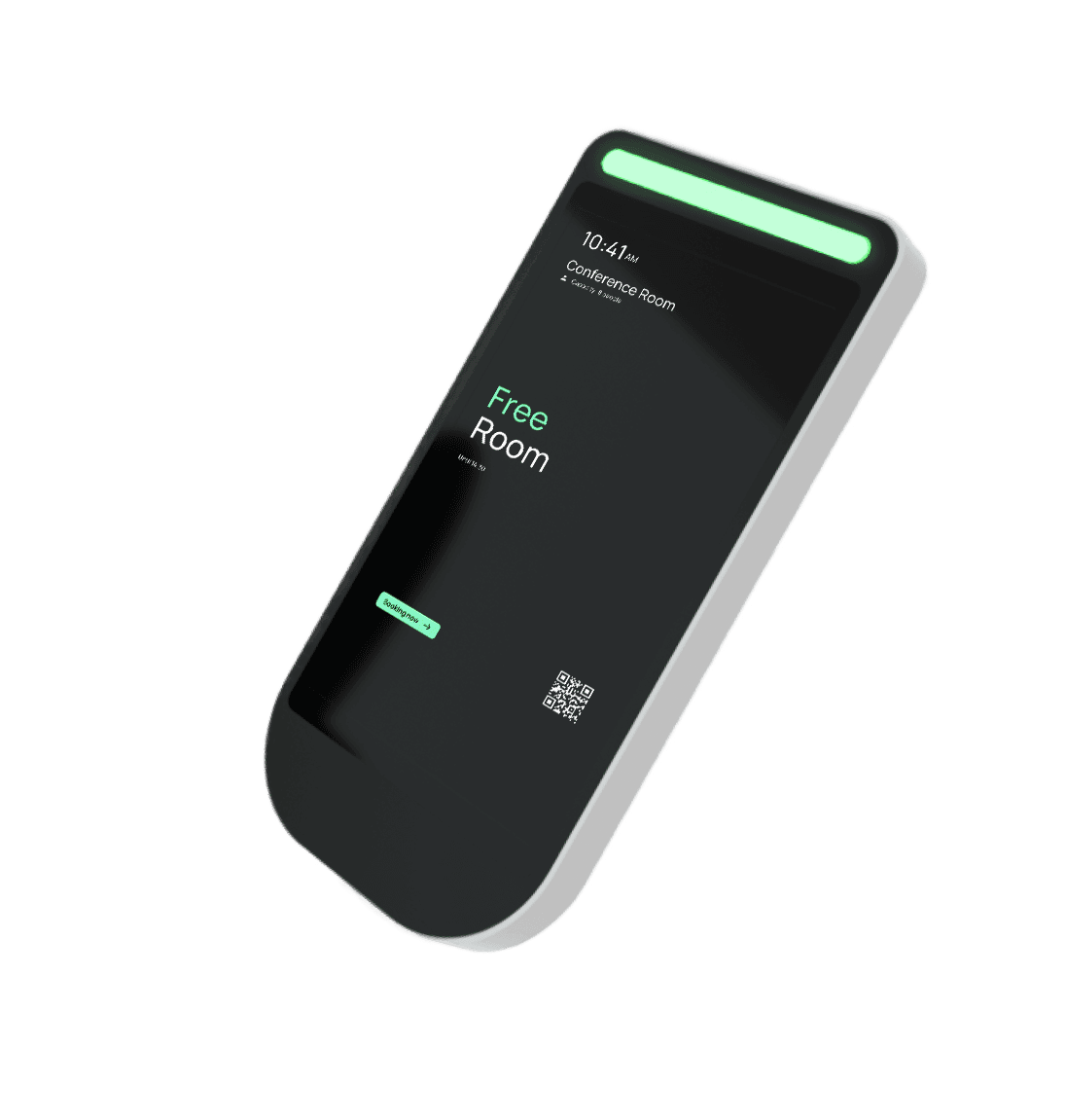
Hybrid multiplied the meetings and the recurring holds that go with them. The calendar says every room is taken from nine to five; walk the corridor and three of them are dark. Nobody cancels, so the rooms stay locked up all week. Skedway’s room displays show live status at the door and reclaim a room automatically when nobody checks in, which puts capacity back into circulation without anyone policing it. For you, that’s two SKUs per room plus a number you can bring to the next review — hours of meeting space recovered, with no construction involved.
- ★Two display SKUs per room, plus the software that drives them
- ★No-show release solves the complaint facilities hears most
- ★Visible in the corridor every day — your brand stays in front of the client
04Finance wants proof, and there isn’t any
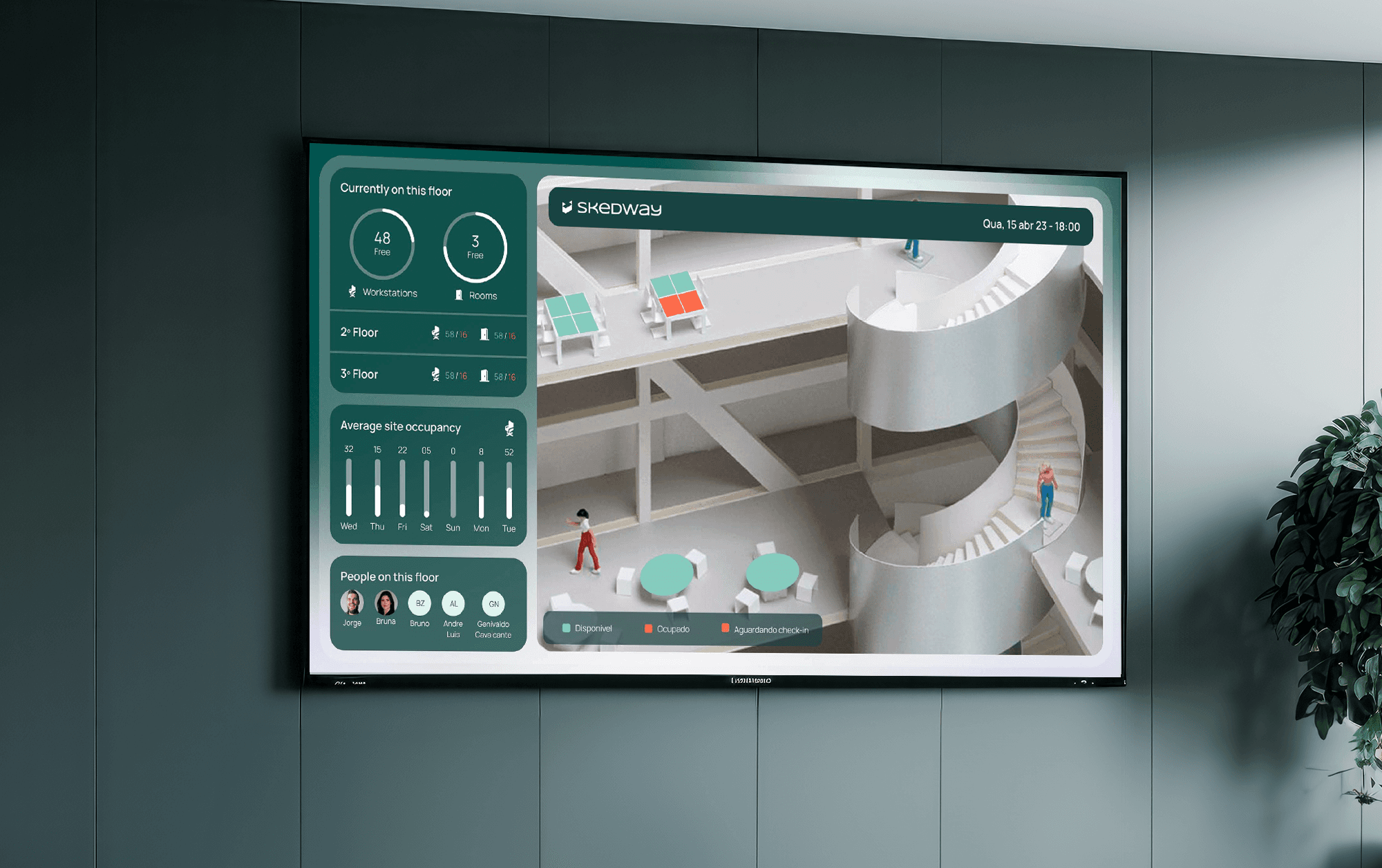
Somewhere above your contact, someone is asking whether the company still needs this much space. Without measurement, that conversation gets settled by whoever is most confident in the room — and facilities usually loses. Skedway’s Workplace 3D turns the floor plan into a live picture of what’s used, when and by which teams, so space decisions come with evidence attached. For you, this is the piece that protects the renewal and draws the map for the next phase: you can see precisely which floors, buildings and departments to quote next, and so can the client.
- ★Gives your champion the numbers to defend the budget — and your line item
- ★Shows you where to expand instead of guessing at the next proposal
- ★Turns renewal season from a defense into a discussion about phase two
05The front desk isn’t staffed anymore
Hybrid thinned out the reception desk, but visitors, candidates, contractors and couriers still turn up. Now they stand in the lobby texting whoever invited them, and there’s no reliable record of who was in the building. Skedway handles arrival without a person sitting there: visitors are pre-registered, entry runs from a QR code or a phone, and the host gets notified the moment their guest checks in. For you, it’s an easy add-on to a desk or room deal, and it lands with the people who own compliance and site security as well as facilities — which is how a single-department deal becomes a building-wide one.
- ★Low-friction upsell onto an existing Skedway footprint
- ★Gives you a second and third stakeholder inside the account
- ★An auditable record of who entered and when — without adding headcount
06Access is scattered across five systems
A badge for the doors, a key for the locker, a fob for the garage, a separate portal for contractors, and a spreadsheet holding it together. It was manageable when everyone came in daily. With a rotating population it isn’t: onboarding takes a week of requests, offboarding gets missed, and nobody can answer who still has access to what. Skedway consolidates it into one digital credential that opens doors, lockers, parking, desks and rooms, granted and revoked from one place. For you, this is the stickiest line in the bundle. Once a client’s access runs through it, replacing you means re-credentialing the whole building.
- ★The hardest line in the deal for a competitor to rip out
- ★Solves an onboarding and offboarding headache IT already owns
- ★Hardware, credentials and software — recurring across all three
07Parking, lockers and the long tail nobody owns
Assigned parking stops making sense when attendance swings by fifty percent day to day — spaces sit reserved and empty while people circle the block. Lockers become essential the moment nobody has a permanent desk, and storage turns into a queue managed by email. These are the requests that pile up on an office manager because they don’t belong to anyone in particular. In Skedway they’re just more bookable resources in the same system employees already use for a desk, so they get solved without a new tool or a new owner. For you, they’re the natural second and third phase after the initial deal — small quotes with almost no sales cycle, because the platform is already in.
- ★Expansion SKUs that ride on a deployment you’ve already won
- ★Short cycles — no new evaluation, no new vendor review
- ★Clears the requests that make your champion look good internally
08They already bought five apps, and nobody uses them
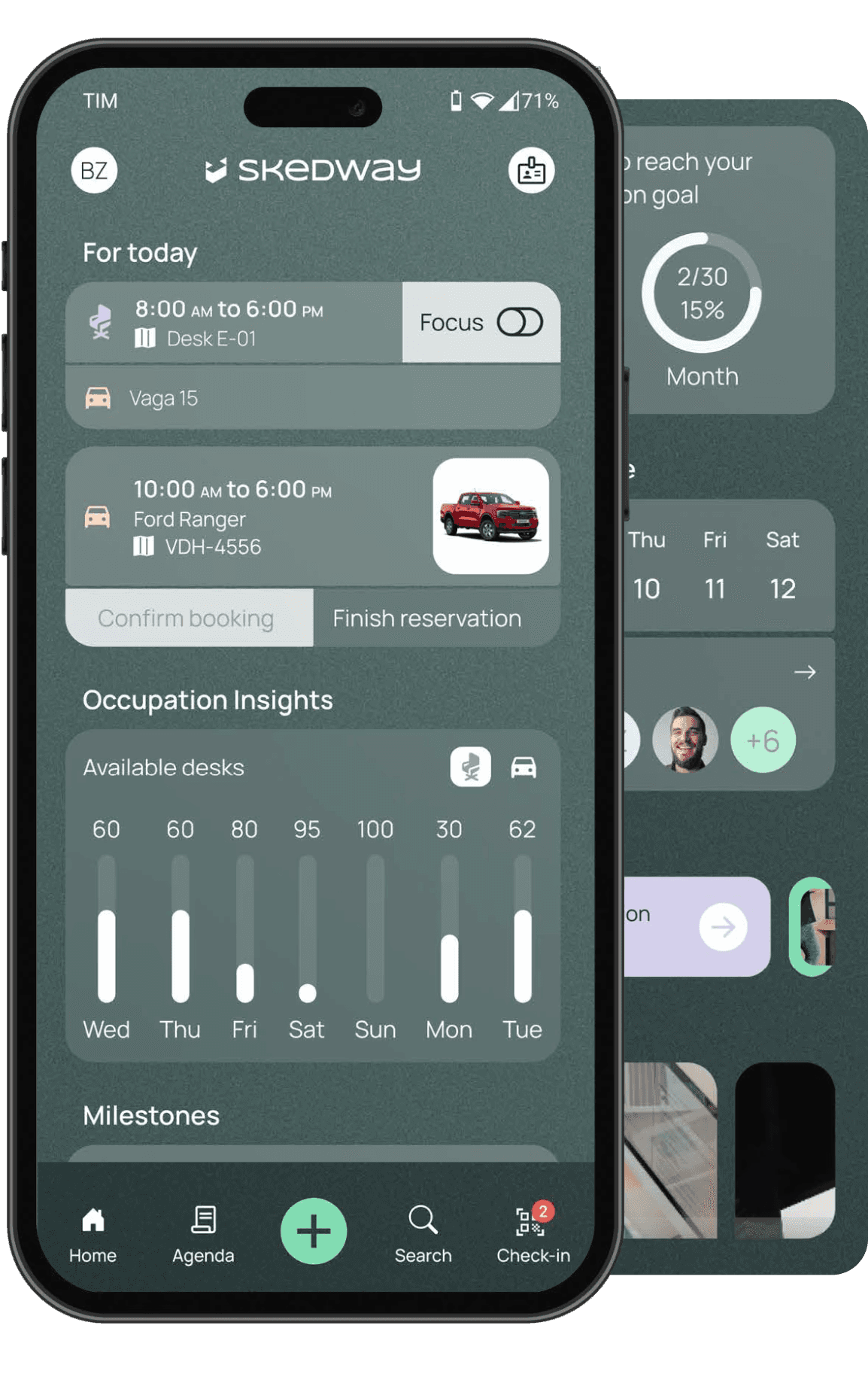
Most hybrid programs failed on adoption, not intent. One app to book a desk, another for rooms, a form for visitors, an email for parking — and employees route around all of it. IT inherits the tickets and the renewal nobody can justify. Skedway is one app for the whole workplace, and the parts that matter most run on sensing rather than compliance, so the system stays accurate even when people don’t interact with it. For you, that means shorter deployments, fewer support calls landing on your team, and one vendor behind the entire stack — so when something needs attention, there’s no finger-pointing for you to referee.
- ★Adoption without training — fewer tickets for your help desk
- ★Consolidates several subscriptions into the one you supply
- ★One ecosystem, one vendor — you don’t own the finger-pointing
Why this conversation is worth having
Hybrid office management is a problem your clients are already trying to solve, usually badly, with tools they bought separately. That makes it one of the easier conversations to open — and one of the better lines to own, because it recurs, expands and stays put.
- ★Recurring revenue — across hardware, software and service, not a one-time sale
- ★Land and expand — start with desks or rooms, grow into access, parking and new sites
- ★Stickier accounts — daily-use software and building access are hard to displace
- ★A real differentiator — workplace experience sets you apart from box-shifters
- ★An opening you don’t have to manufacture — your clients raise hybrid friction on their own
- ★You bring the customer, we bring the rest — blind dropship, marketing support and optional paid professional services from Image Star
Reseller pricing and margins on the Skedway line are shared directly with our partners — just ask.
Bring us your next hybrid conversation
Tell us what your client is struggling with and we’ll help you scope it, demo it and fulfill it. Reseller pricing and margins shared when we talk — no pressure either way.
Talk to Image Star about Skedway →Or call 888-632-5515 · 8am–8pm EST — The Image Star Team
 in partnership with
Image Star is a value-added distributor bringing Skedway to the workplace-technology channel. Sold to resellers only. © 2023–2026 Image Star, LLC. Skedway product names and imagery are property of Skedway.

.png)